


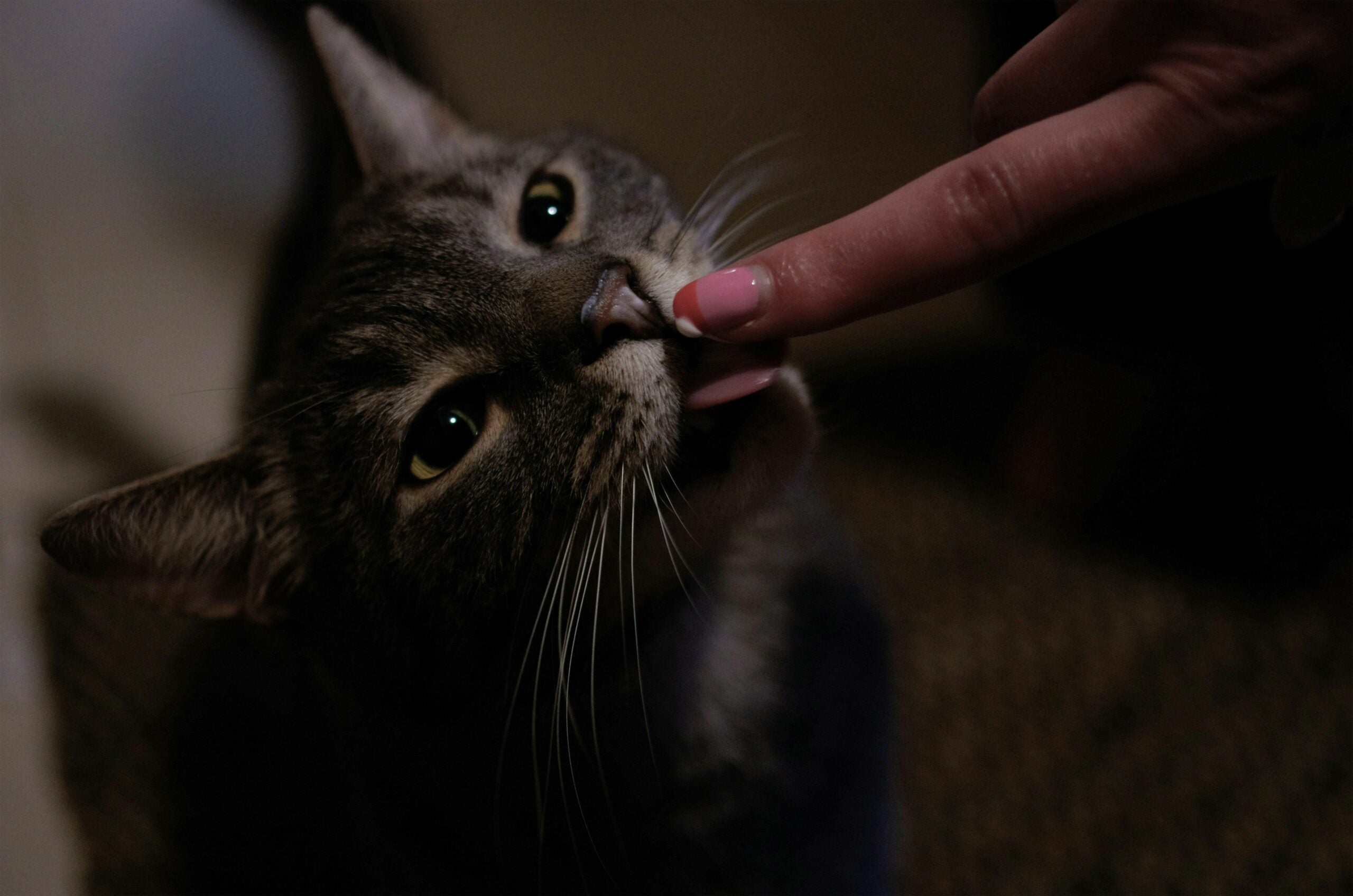
Have you found a stray cat and are now wondering how old it might be? Without precise information about its past, determining a cat's age can be a real challenge.
A cat's age can be estimated using various methods, including examining its teeth, fur, physique, and eyes.
In this article, we will guide you through the different techniques for determining a cat's age and explain how you can learn more about your new four-legged family member using behavioral observations and modern technology such as the Flappie cat flap.
Methods for determining the age of a found cat
If you've found a stray cat and want to determine its age, there are several methods you can use. Knowing a cat's age is important for better understanding its health needs and responding accordingly. A veterinarian can often provide the most accurate age estimate, but there are also some techniques you can use yourself to get a rough idea.
A cat's age can be determined by examining its teeth, fur, body structure, and eyes. Each of these methods provides different clues to the animal's age:
- Teeth : Wear and tear and the presence of certain stages of tooth development.
- Fur and body : Changes in fur texture and muscle structure.
- Eyes : Clarity and any cloudiness.
It's helpful to combine these physical characteristics with the cat's behavior to make a more comprehensive age estimate. Keep in mind that some signs of aging can also indicate illness. Therefore, if you have any doubts, it's always a good idea to consult a veterinarian who can professionally assess your cat's health.
Examining teeth to determine age
Examining a cat's teeth is an effective way to determine its age. Young cats typically have clean, white teeth, while older cats' teeth often show signs of wear and tartar buildup. The presence of milk teeth or the absence of certain permanent teeth can also provide clues about a cat's age.
Veterinarians often use dental examinations as one of the main indicators of a cat's age. As cats age, some teeth may be missing or show signs of disease such as gingivitis. Regular dental checkups are therefore important not only for age determination but also for general health maintenance.
Examine fur and body to estimate age

A cat's coat and body change with age and can provide clues to its approximate age. Young cats typically have a glossy, dense coat, while older cats often have a duller and thinner coat. Muscle structure can also change; older cats often show less muscle mass and more loose skin.
Additional signs that may indicate a cat's age include:
- Changes in coat pattern : Grey hairs or a change in coat color.
- Posture : Older cats sometimes have a less stable posture.
- Weight changes : Weight loss or gain can be related to age.
Examine eyes to determine age
A cat's eyes offer valuable insights into its age. Young cats typically have clear, bright eyes, while the eyes of older cats may show cloudiness and a loss of luster. These changes often begin around the age of seven and become more pronounced with age.
Additionally, look out for signs such as:
- Discharge or excessive tearing : This may indicate age-related problems or illnesses.
- Changes in the iris : Unevenness or a rough edge can also indicate advanced age.
- Pupil reaction : Changes in the pupil's reaction to light can also be age-related.
It is advisable to consult a veterinarian if you notice any abnormalities to ensure the health of your cat's eyes.
Cat behavior as an indicator of age
A cat's behavior offers important clues to its age. Young cats are typically very active and curious. They explore their surroundings with great energy and often display playful behavior, frequently jumping, running, and climbing. In contrast, older cats tend to be calmer and spend more time sleeping or dozing. A noticeable decline in activity can be a sign that a cat is getting on in years. Additionally, behavioral changes such as increased anxiety or confusion may indicate that a cat is experiencing age-related cognitive changes.
Besides general activity levels, there are specific behaviors that can indicate a cat's age:
- Sleep patterns : Older cats often sleep longer and more deeply. If a cat spends more time in its sleeping area or seeks easier access to its favorite spot, this could be a sign of its advanced age.
- Interaction with humans and other animals : While young cats are often playful and social, older cats may be more withdrawn and prefer quieter environments.
- Response to environmental stimuli : Older cats may react less to sounds or movements. Changes in how a cat reacts to its environment can indicate a decline in its sensory abilities, which often accompanies age.
Observe these behaviors to get a better idea of the age of the cat you found. However, every animal is unique, and changes in behavior should always be considered in conjunction with other observed signs of aging and, if possible, a veterinary evaluation.
How Flappie can help you learn more about your found cat
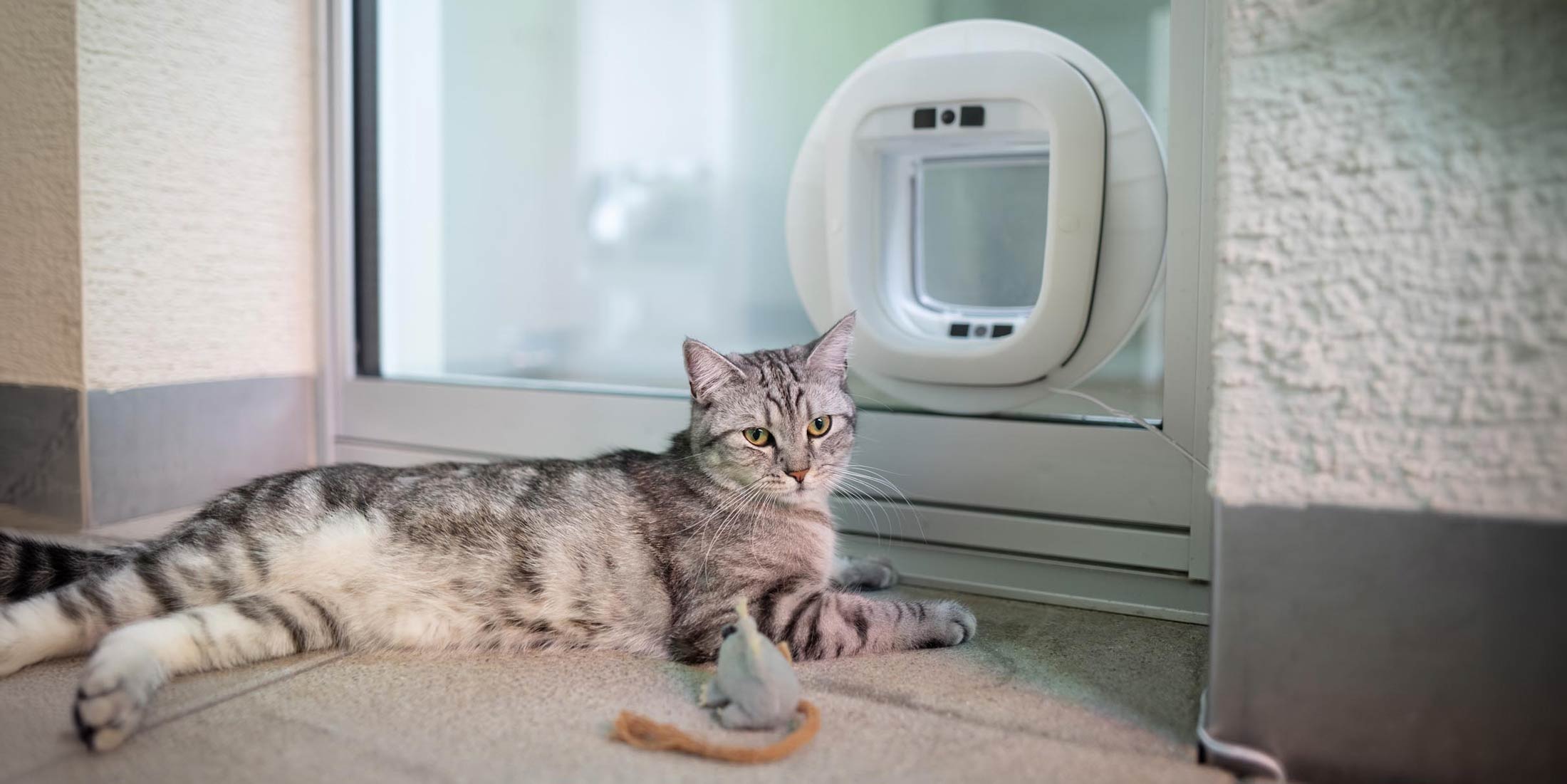
The Flappie smart cat flap isn't just easy access for your cat; it's a true high-tech device that helps you learn more about your cat's behavior and health. With a built-in camera and AI technology, the flap analyzes your cat's behavior and provides valuable insights that can help determine its age. For example, the camera can detect how active your cat is, which could be an indicator of its age. Young cats are generally more active, while older cats need more rest. Here are some of the features Flappie can help you with:
- Activity monitoring : Records how often and when your cat leaves or enters the house.
- Behavioral analysis : Identifies behavioral patterns and shows changes over time.
- Health monitoring : Detects behavioral abnormalities that could indicate health problems.
In addition to monitoring, the Flappie app allows you to personalize settings and receive notifications when your cat's behavior changes. This can be especially useful for recognizing age-related changes early on. The app also provides videos and statistics that give you deeper insights into your cat's life. All this information can help you better understand what stage of life your cat is in and provide for its needs accordingly. Flappie therefore offers the following advantages:
- Personalized notifications : Informs you about important changes in your cat's behavior.
- Video recordings : Allows you to visually track your cat's activities.
- Statistical analyses : Provides detailed reports on your cat's behavior and health.
Visit Flappie now to learn more about how you can better understand and support your cat's life with the smart cat flap.
Frequently Asked Questions
How can you find out how old a cat is?
A cat's age can be estimated by examining its teeth, coat, build, and eyes. Teeth show signs of wear and developmental stages that can indicate age. The coat and build also change with age; older cats often have a duller, thinner coat and less muscle mass. The eyes may become cloudy, a condition that increases with age. Behavioral observations, such as activity and sleep patterns, provide additional clues to a cat's age.

Share:
Do Cats Hunt Rats? Analysis of Cat Hunting
Cat 2 Years Behavior: Understanding and Tips