


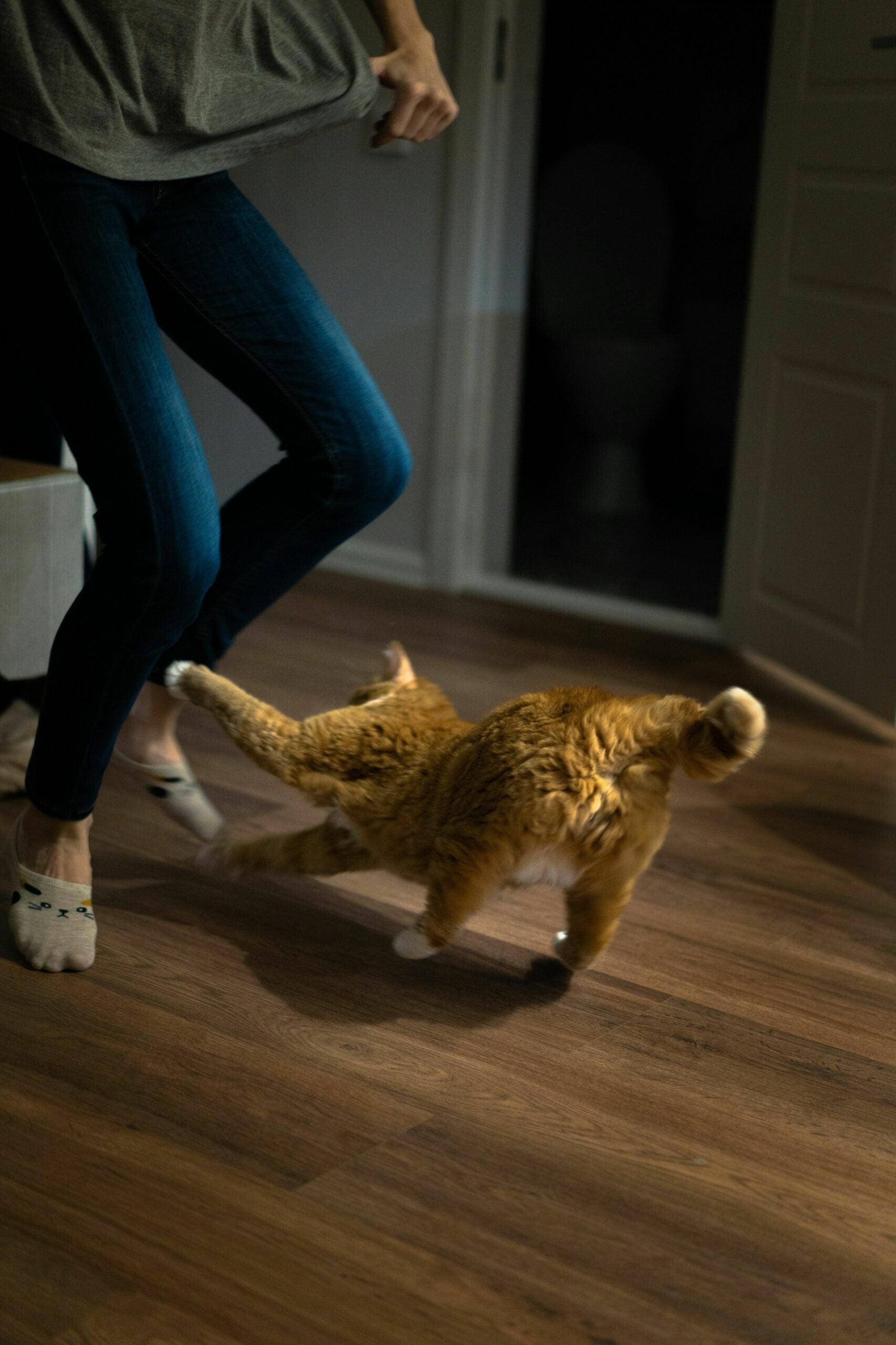
Have you ever experienced your cats chasing each other around the apartment like crazy?
This behavior can be confusing and sometimes even worrying.
Often it is a natural play behavior in which cats release their energy and follow their hunting instinct.
In this article, we explore why cats chase each other around the apartment, how to distinguish play from seriousness, and what to do if conflicts arise.
Causes: Why do cats chase each other around the apartment?

Cats are natural hunters, and this behavior manifests itself in the home, where they release their excess energy by chasing each other around the rooms. This behavior is particularly noticeable in young or very active cats, who playfully indulge their hunting instincts in the mornings or evenings when their activity is at its peak. It's important to understand that such behavior is generally normal and healthy for cats, as long as it doesn't escalate into genuine aggression.
Several factors can contribute to cats chasing each other around the house. Firstly, boredom can be a trigger, especially if cats don't receive enough stimulation from toys or interaction with their owners. Secondly, competition for resources such as food or owner attention can lead to playful, but also serious, altercations. Therefore, in multi-cat households, it's important to provide each animal with sufficient space and resources to minimize conflicts.
Play or serious? How to correctly interpret cat behavior
It's not always easy to tell if cats are playing or fighting. Play fights are usually silent and short-lived, with the cats taking turns being the hunter and the hunted. However, if you observe one cat constantly chasing another without the roles being reversed, or if you hear sounds like hissing and meowing, this could indicate a more serious conflict.
Other signs that may indicate a game has turned into a fight include:
- Cats' posture: A tense, rigid posture is often an indicator of stress or aggression.
- The absence of playful gestures such as a gentle bite or a light paw swipe without extended claws.
- Frequent hiding of one of the two cats may indicate that it feels threatened. In such cases, it is important to observe the situation closely and intervene if necessary.
Recognizing and resolving conflicts between cats
Conflicts between cats can begin subtly and build slowly. An early sign of tension is one cat avoiding direct eye contact or demonstratively ignoring the other. If one cat tries to control certain areas of the home and the other avoids them, this can also indicate a problem.
To resolve conflicts effectively, it is helpful to understand the causes and act accordingly:
- Make sure each cat has its own food and sleeping area.
- Use Feliway diffusers to calm cats and reduce stress.
- Make sure each cat gets enough attention from you to avoid jealousy.
- In cases of persistent conflict, consulting a veterinarian or cat psychologist may be helpful.
Bullying among cats: Recognizing and taking action

Bullying among cats can have serious consequences for the well-being of the affected animals. Typical signs of bullying include a cat being constantly harassed, chased, or attacked by one or more other cats. Being constantly pushed away from food or the litter box can also indicate bullying.
If you notice bullying between your cats, it is important to act quickly:
- Separate the cats to avoid further stress and injuries.
- Ensure there are enough resources such as feeding stations and litter boxes so that every cat has access without confrontation.
- Keep the cats busy with play and training to boost their confidence and reduce aggression.
- If you are experiencing persistent bullying, you should not hesitate to seek professional help to resolve the problem permanently.
Understanding relationships between cats
Cats are complex creatures with their own social structures, which are strongly influenced by their relationships with one another. In a multi-cat household, various dynamics can arise, ranging from harmonious coexistence to serious conflicts. It's important to understand that not all cats have the same social skills or needs. Some enjoy the company of other cats, while others prefer solitude. These differences can lead to tension, especially when cats have to share their space and resources.
To understand the relationships between your cats and minimize conflict, it's helpful to observe their interactions closely. Signs of stress or discomfort can be subtle, such as increased withdrawal or low tolerance for closeness. It's crucial that each cat has enough personal space, both physical and emotional. Ensure you provide sufficient resources like feeding areas, water bowls, and litter boxes to avoid competition and promote peaceful coexistence.
Intervening in cat fights: methods and timing

If you notice your cats fighting, it's important to intervene correctly and promptly to prevent injuries and avoid escalating the situation. Observe the cats' body language carefully : signs such as a tense posture, fixed gaze, or loud hissing are clear indicators that it's no longer play. In such cases, you should gently but firmly separate the cats. Avoid grabbing the cats with your hands, as this can cause injury.
There are several methods to safely intervene in a cat fight:
- Spraying water : A gentle spray of water can surprise the cats and interrupt the fight.
- Making noise : A loud noise, such as clapping hands or dropping a heavy object, can also help to distract the cats.
- Physical barriers : Place a piece of cardboard or a cushion between the fighting cats to keep them safely separated.
Use these methods to prevent the situation from escalating and ensure that each cat has a quiet place to retreat to afterwards.
Discover Flappie's smart solutions for cat owners
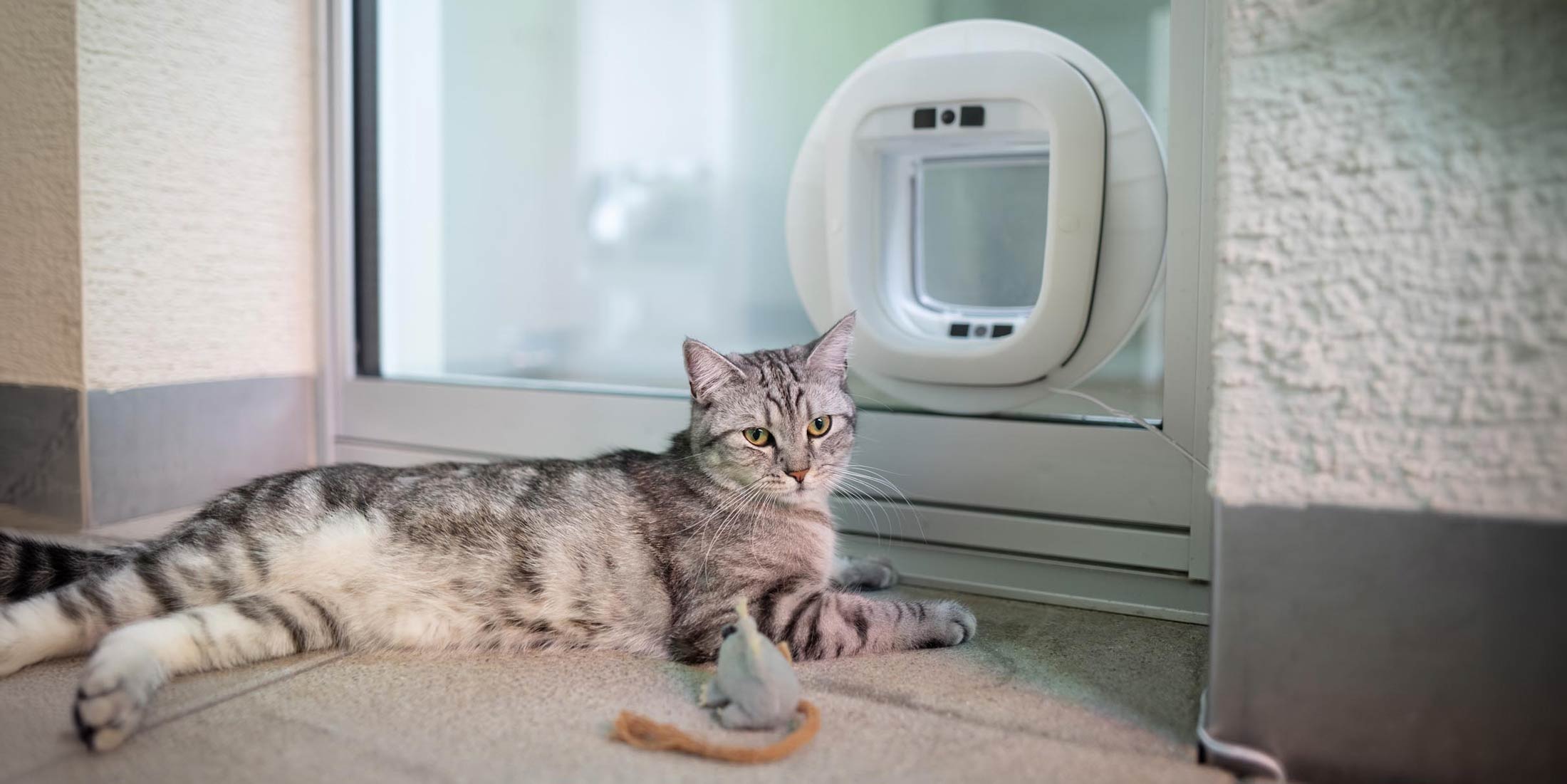
Imagine being able to solve the problem of mice your cat brings home once and for all . With the Flappie smart cat flap, this is possible. This flap isn't just a simple way for your cat to pass through; it's equipped with advanced technology that recognizes prey animals , preventing your cat from bringing in unwanted guests. The advantages are clear:
- Selective access control : Only your cat can pass through, no prey.
- AI-supported prey detection : A camera identifies animals brought in and denies them entry.
Frequently Asked Questions
What does it mean when cats chase each other?
When cats chase each other around the house, it's often a sign of natural play behavior. They're releasing excess energy and following their hunting instincts. This behavior is particularly common in young or very active cats and is generally normal and healthy.
Why do cats suddenly run wildly through the apartment?
Cats often suddenly run around the house to release excess energy and satisfy their hunting instincts. This is especially common in the morning or evening hours when their activity is at its peak. Boredom or a lack of stimulation from toys or interaction with their owners can also contribute to this behavior.
Why is my cat chasing the other cat?
Your cat might be chasing the other cat as part of playful behavior to satisfy its hunting instincts. However, serious fights can also occur if one cat constantly chases the other without switching roles, or if aggressive vocalizations are heard. This could be a sign of conflict, especially if resources like food or attention are scarce.
Should you intervene when cats are fighting?
Yes, it's important to intervene correctly and promptly if you notice your cats fighting. Observe their body language carefully and separate them gently to avoid injuries. Methods such as spraying water, making noise, or using physical barriers can help to safely separate the cats.

Share:
Cat just watches while playing - tips and tricks
Understanding Cat Behavior and Prey Gifts: A Guide