



Imagine suddenly finding a live mouse in your house!
The unexpected appearance of a mouse can be truly unsettling and raise many questions.
The best solution is to use live traps that capture the mouse without harming it, and then release it far away from your home.
This article will tell you everything about effective measures against mice in the house, from natural home remedies to using an exterminator.
Effective measures against mice in the house

Mice in the house can be not only unpleasant but also harmful to your health. There are various effective measures to control or remove these small rodents from your home. In this section, we will look at some of the most effective methods , from natural home remedies to snap traps. The goal is to help you find a solution that suits your home and your situation.
The first step in mouse control is often to drive them away without using harmful substances. There are natural home remedies for this that are not only environmentally friendly but also safe for other pets. We'll see how simple ingredients like peppermint oil or vinegar can help repel mice. These methods are especially useful if you're looking for a pet-friendly solution .
For more persistent cases, however, stronger measures may be necessary. This is where poison baits and snap traps come into play. Although these methods are effective, they must be used with caution to ensure the safety of children and pets. The following sections describe the advantages and disadvantages of these approaches in more detail.
Natural home remedies for mice

Natural home remedies for mice are a popular first choice for getting rid of the small rodents without harming them. Peppermint oil is particularly effective; a few drops on a cotton ball can be enough to drive mice from their hiding places. The strong scent overwhelms the mice's sense of smell, making the house less attractive to them.
Other effective home remedies include vinegar and strong spices like cayenne pepper. These can be placed at entrances and potential entry points. Here are some simple applications:
- Vinegar can be used to wipe floors and surfaces to deter mice.
- Cayenne pepper can be scattered around the foundations of the house to prevent intrusion.
These methods are safe for your home and help keep mice away naturally.
The use of poison against mice
The use of poison against mice is an effective but controversial method of pest control. Poison baits contain substances that, when ingested by mice, cause internal bleeding and ultimately death. It is important that these baits are placed securely in bait stations to prevent access by children and pets.
Despite their effectiveness, the use of poison carries significant risks. Here are some points to consider:
- Safety : Make sure all poison baits are kept out of reach of children and pets.
- Environmental impact : The poison can also harm other wild animals that eat the poisoned mice.
These factors must be carefully considered before deciding on this method.
Snap traps for controlling mice
Snap traps are one of the most well-known methods for controlling mice. They work by means of a mechanism that snaps shut when a mouse tries to take the bait, killing the animal instantly. These traps are often reusable and can be a cost-effective option for recurring mouse problems.
However, there are a few things to keep in mind when using snap traps. Here are some tips for effective use:
- Placement : Place the traps along the walls and near possible mouse holes.
- Bait : Common baits include peanut butter or cheese. Ensure the bait is securely attached to avoid false triggers.
These types of traps can offer a quick solution to mouse problems, but require some care in handling.
Signs of mice in the house

If you suspect you have mice in your home, there are certain signs that can help confirm this. First, look for mouse droppings , which are often found near food sources, in drawers, or along pathways. These small, elongated droppings resemble grains of rice and are a clear indication of a mouse infestation. Another telltale sign is gnaw marks . Check furniture, packaging, and cables for small bite marks, as mice like to gnaw on various materials to sharpen their teeth.
In addition to droppings and gnaw marks , noises like rustling or scratching, especially at night, can also indicate the presence of mice. Mice are nocturnal, and these noises often come from walls or ceilings. Also, look for nesting materials such as grass, straw, or scraps of paper that might be hidden in corners or closets. Mice use these materials to build their nests, which is another indication of their presence in your house.
Potential damage caused by mice in the house

Mice in the house can be more than just a nuisance; they can cause significant damage. Their constant gnawing can lead to structural damage in walls, ceilings, and insulation. This can not only compromise the stability of your home but also result in costly repairs. Their preference for chewing on various materials can also damage furniture and personal belongings.
One of the most dangerous habits of mice is gnawing on electrical cables, which can lead to short circuits and even fires . Here are some of the main areas that could be affected:
- Electrical systems and equipment
- Lighting equipment
- Heating and cooling systems
These risks demonstrate the importance of removing mice from your home quickly and effectively to ensure safety and security.
Diseases transmitted by mice
Mice are not only unwelcome guests in your home, but they can also transmit pathogens that can be dangerous to humans. Among the most well-known diseases is the hantavirus , which can cause flu-like symptoms such as fever, fatigue, and sometimes more serious complications. The best protection against infection is to avoid contact with mice and, in particular, their droppings. Here are some preventative measures:
- Keep your home clean and free of food scraps to avoid attracting mice.
- Seal food and pet food securely.
- Use lockable garbage cans to keep mice out.
Besides hantavirus, mice can also transmit other diseases such as leptospirosis , which can be spread to humans through contact with water or food contaminated with the urine of infected animals. To protect yourself and your family, it is important to avoid direct contact and wash your hands thoroughly and regularly, especially after being in areas frequented by mice. Other precautions include:
- Wearing gloves when working with materials that may be contaminated.
- Moistening dust in areas where mouse droppings may be present to prevent the inhalation of contaminated particles.
Use of an exterminator in case of mouse infestation

If you're dealing with a mouse problem and natural methods aren't working, it might be time to hire a professional exterminator. Exterminators use specialized techniques and methods, such as bait and snap traps, to get rid of mice quickly and effectively. They also offer discreet service, so no one in your neighborhood needs to know about your mouse problem.
Pest control experts are not only trained to eliminate mouse infestations, but also to implement preventative measures to avoid future problems. This includes the safe placement of bait stations and advice on how to prevent mice from entering your home. A professional exterminator can help you keep your home mouse-free for the long term.
Cats as natural mouse hunters

Cats are known for being effective mouse hunters. Their natural instinct drives them to hunt mice, making them an environmentally friendly solution to mouse problems. You can take advantage of this by keeping a cat or strategically placing used cat litter. The smell of the litter deters mice, as they perceive the scent of cats as a potential threat and will quickly flee.
Sticky traps for mice

Glue traps are a common method of mouse control, often used in warehouses and distribution centers. They consist of a strong adhesive applied to a flat surface. Mice that walk over the trap get stuck and cannot escape. These traps are particularly effective in areas where traditional snap traps or poison baits cannot or should not be used.
Despite their effectiveness, glue traps are banned in many countries, including Germany, due to the animal cruelty involved. Mice caught in these traps often suffer a slow and painful death. It is important to check the laws and regulations in your country before choosing this method. Alternatively, there are humane methods such as live traps, which catch mice without harming them.
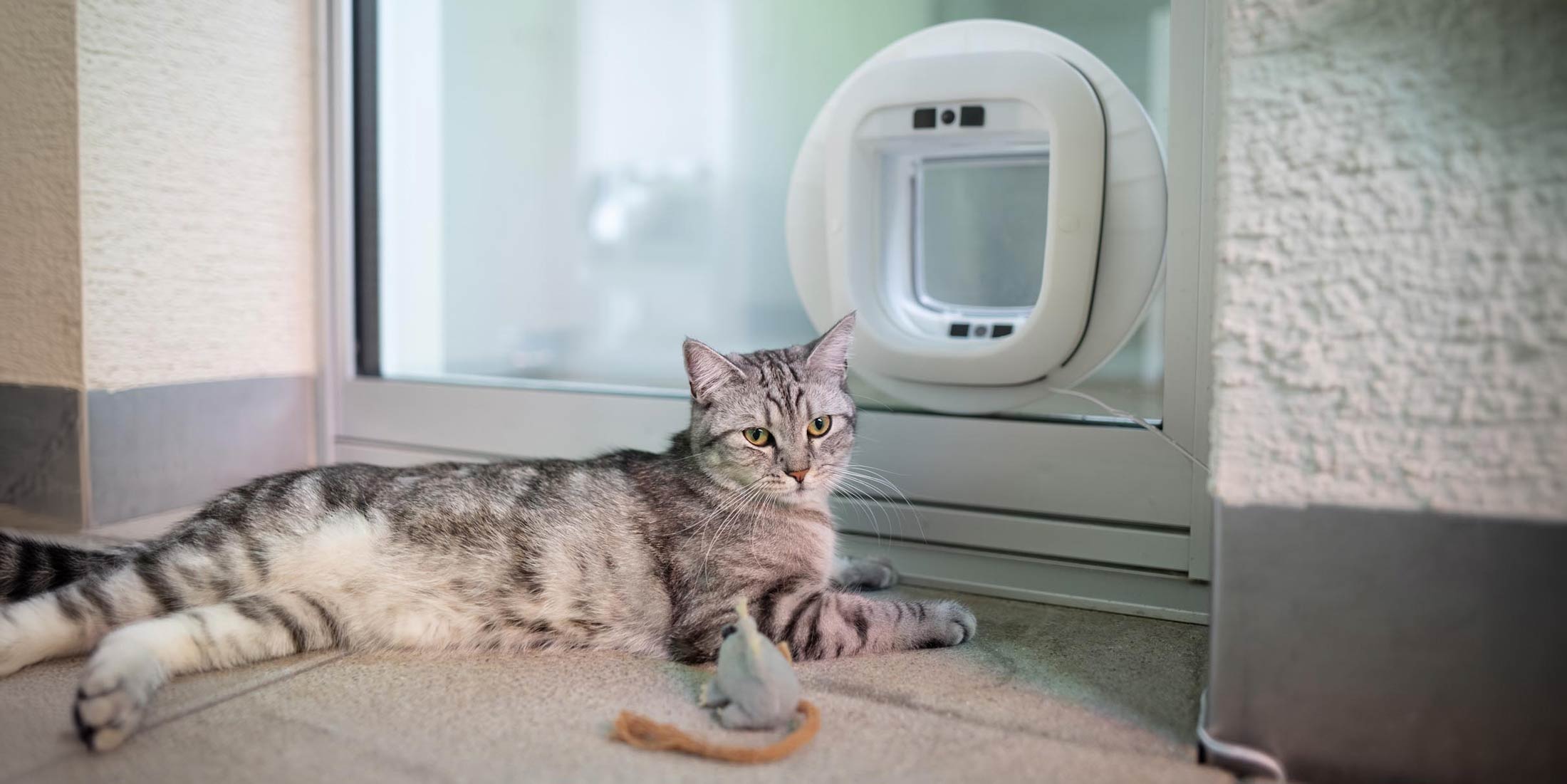
Keep mice out of your house with Flappies smart cat flap
Have you ever wished your cat wouldn't bring mice into the house anymore? With the Flappie smart cat flap, that's now possible. This innovative flap detects if your cat is carrying a mouse or other small intruder and denies access. This keeps your home clean and free of unwanted guests. The advantages are obvious: no more unpleasant surprises and a more hygienic environment for you and your family.
The Flappie cat flap not only offers selective access control, but also easy operation via the accompanying Flappie app . Through this app, you can manage the flap's settings, receive notifications, and even see live what's happening in front of the flap. Here are some of the app's highlights:
- Notifications : Get instant updates when your cat tries to bring home prey.
- Remote control : Adjust the cat flap settings from anywhere.
- Live view : See what your cat is doing right now, no matter where you are.
Visit flappiedoors.com to learn more about this smart solution and how you can implement it in your home.
Frequently Asked Questions
How do you get rid of a mouse in the house?
There are several ways to get rid of a mouse in your house. You can use natural home remedies like peppermint oil or vinegar, which overwhelm the mice's sense of smell and drive them away. For more persistent cases, you can use poison bait or snap traps, making sure to place them securely to protect children and pets. Another humane method is to use live traps to catch the mice and then release them far away from your home.
How can you lure a mouse out of its hiding place?
To lure a mouse out of its hiding place, you can use bait. Common baits for mousetraps are peanut butter or cheese. These should be securely attached to the trap to prevent false triggers. The strong smell of these baits attracts mice and entices them to leave their hiding place.
Is having a mouse in the apartment a bad thing?
Yes, having a mouse in your home can be problematic. Mice can be harmful to your health and transmit various diseases, such as hantavirus and leptospirosis. Furthermore, their constant gnawing can cause structural damage to your house, including gnawing on electrical cables, which can lead to short circuits and fires. Therefore, it's important to control mice quickly and effectively.



Share:
Training Tips for Hunting Domestic Cats: Tips and Tricks
Additional Module Hunting Behavior: Everything you need to know