


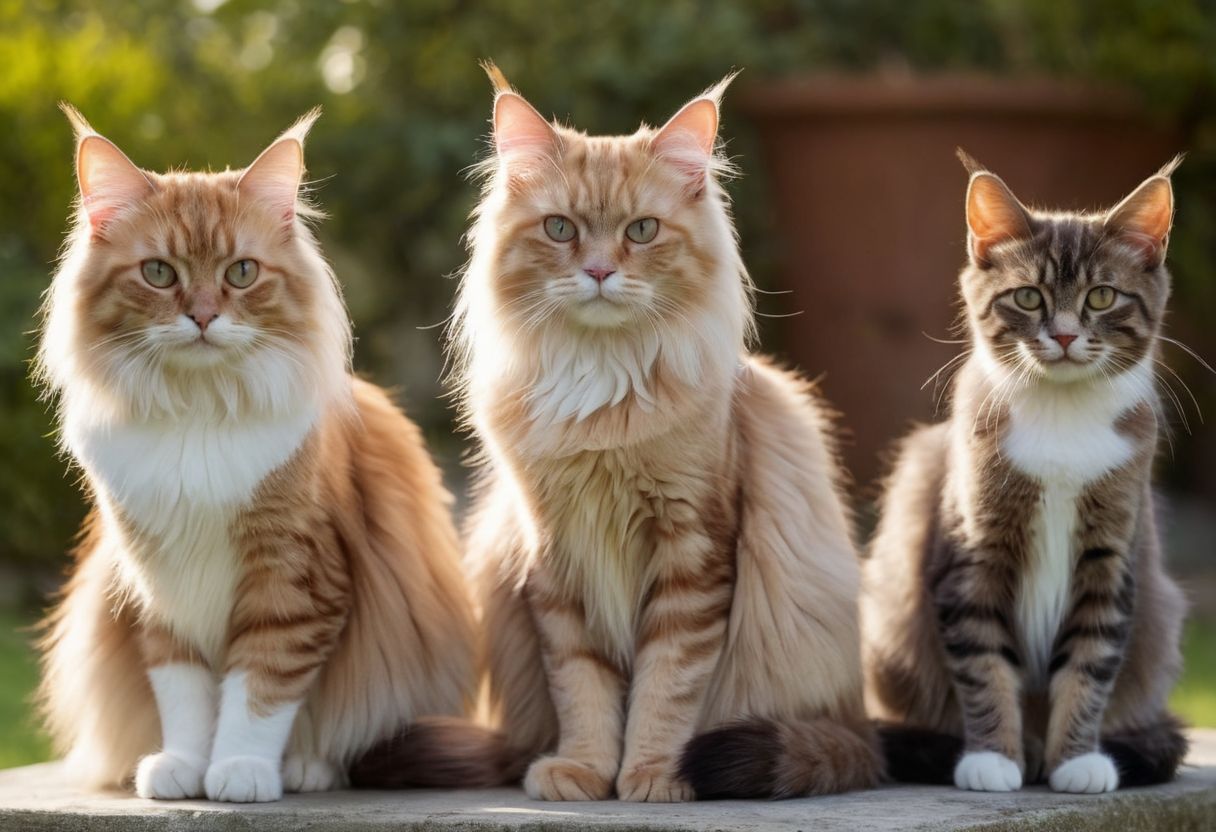
Have you ever wondered what breed your furry companion is? It's often not easy to determine a cat's exact breed, especially if it's a mixed breed. To identify a cat's breed, you can look at characteristics such as fur length, coat pattern, ear position, and posture.
This article will show you how to identify your cat's breed based on various characteristics and which tools can help you do so.
Breed overview: Explore the diversity of cat breeds

Cats are fascinating animals, not only because of their independent and mysterious nature, but also because of the incredible diversity of breeds found worldwide. Each cat breed has its own distinctive characteristics that make it unique. From the elegant Siamese to the robust Maine Coon, from short-haired breeds like the British Shorthair to long-haired beauties like the Persian – the list is long and varied.
The differences between breeds are not only visible in their appearance, but also in their behavior. Some breeds, like the talkative Siamese or the affectionate Burmese, are known for their strong social skills. Others, like the independent Russian Blue or the calm British Shorthair, tend to be more reserved. This diversity makes each cat breed special and interesting for cat lovers looking for the perfect pet to suit their lifestyle.
Breed history: Origins and development of cat breeds
The history of cat breeds is as diverse as the breeds themselves. Many of today's known breeds have their roots in geographically distant regions and were shaped by human breeding. For example, the elegant Siamese cat originally comes from Thailand, while the robust Maine Coon has its origins in North America. Over the centuries, selective breeding and natural mutations have repeatedly led to the development of new breeds that differ in appearance and temperament.
Coat characteristics: Key to determining cat breed

A cat's coat is one of the most distinctive features that can help determine its breed. Different cat breeds exhibit different coat characteristics, such as length, texture, and pattern. These features can provide important clues for identifying a cat's breed. Especially with purebred cats, these characteristics can be very pronounced and allow for precise classification.
There are many coat types, ranging from short to long and from straight to curly. These differences are often genetic and have been enhanced through selective breeding. For example, Persian cats are known for their long, dense fur, while Siamese cats have short, fine fur. Understanding these characteristics can help you learn more about your cat's possible ancestry and determine its breed more accurately.
Coat length: An important indicator for breed identification
Coat length is a crucial factor in determining a cat's breed. Generally, there are three main categories: short-haired, long-haired, and sometimes semi-long-haired. Short-haired cats, such as the British Shorthair, have a dense but short coat that requires little grooming. Long-haired cats, such as the Maine Coon, have a long, flowing coat that requires regular grooming. This information is important not only for breed identification but also for the cat's overall care.
Body size and shape: clues to the cat breed
Body size and shape are also important indicators for determining a cat's breed. Cat breeds vary greatly in size and body shape, which often provides clues to their origin and breeding history. For example, Maine Coon cats are known for their large stature and robust build, while Siamese cats tend to be slender and elegant. These physical characteristics, along with other traits, can help identify a cat's breed.
Tail length: Another clue for breed identification

Although tail length is often overlooked, it can also be a clue to a cat's breed. Some breeds, like the Manx, are known for their very short tails or even the absence of one. Other breeds, like the Persian, have long, fluffy tails. The length and shape of the tail can provide additional information that, combined with other characteristics, can help determine a cat's breed.
Head characteristics: On the way to breed identification
A cat's head shape and features can provide crucial clues about its breed. Different breeds exhibit specific head structures, ranging from wedge-shaped to rounded. For example, Abyssinians have a distinctly wedge-shaped head, while Persian cats are known for their flat faces and round heads. These traits are not only aesthetically pleasing but also genetically determined and have been emphasized through selective breeding.
Besides the general shape of the head, other head features such as the prominence of the cheekbones, the shape of the nose, and the position of the eyes and ears are also important indicators. For example:
- Abyssinians often have a straight nose and large, almond-shaped eyes.
- British Shorthair cats are characterized by their round heads and strong jaws.
These characteristics not only help in determining the breed, but also provide information about the cats' health predisposition.
Eye characteristics: A window to the cat's breed

A cat's eyes are not only fascinating but also very revealing when it comes to determining its breed. Different breeds have characteristic eye features that can aid in identification. For example, Siamese cats often have striking almond-shaped, bright blue eyes, while the British Shorthair displays large, round eyes in copper or orange. Eye color and shape, along with the placement of the eyes on the head, are therefore important characteristics that play a role in breed identification.
Ear characteristics: Key to identifying cat breed

A cat's ears can also provide crucial clues about its breed. For example, the folded ears of the Scottish Fold are unique and a clear breed characteristic. Other breeds, such as the Oriental Shorthair, have very large, pointed ears set high on the head. The presence of tufts of fur, as seen in the Maine Coon and the Norwegian Forest Cat, can also be an indicator of certain breeds. These traits are not only characteristic but also genetically determined and emphasized through selective breeding.
Behavior: Personality traits and breed identification
A cat's behavior and personality traits can offer revealing clues about its breed. While some breeds, like the Siamese, are known for their talkative and social nature, others, like the Russian Blue, tend to be more reserved and quiet. These behavioral differences are often deeply rooted in the breeds' genetic history and have been reinforced through selective breeding. So, by closely observing your cat's behavior, you might be able to deduce its origins.
- If your cat shows a high level of social interaction and vocalization, it could have characteristics of a Siamese cat.
- If she is rather quiet and reserved, this could indicate a breed like the Russian Blue.
Of course, behavioral traits aren't always definitive indicators of a cat's breed, as individual personality differences also play a role. Nevertheless, they offer valuable clues that, along with other characteristics like coat length, build, and head shape, can be used to more accurately determine the breed. It's also important to note that environmental factors, such as the cat's upbringing and home environment, can influence its behavior. By observing your cat's behavior within the context of its environment and comparing it to known breed characteristics, you can more accurately identify and understand its breed.
Discover how Flappie can help you better understand your cat.
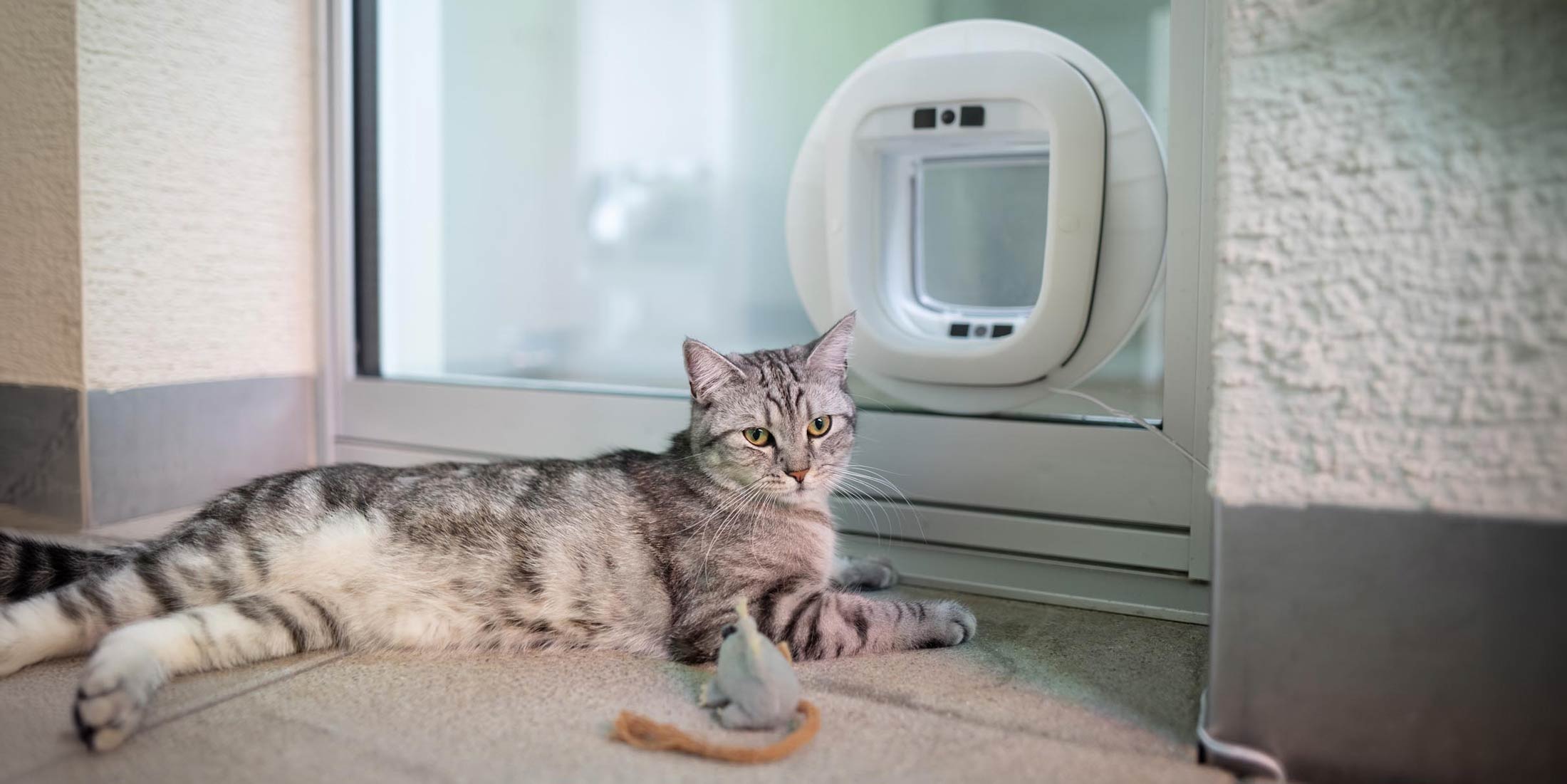
The cat flap is equipped with a camera and AI technology that allows you to closely monitor your cat's activities. If your cat tries to bring home prey, the flap detects this and can selectively deny access. This not only helps you keep your home clean and free of unwanted prey, but also gives you valuable insights into your cat's life.
The Flappie app perfectly complements the smart cat flap by sending you notifications and real-time updates about your cat's activity. You can:
- View videos and photos of your cat taken through the cat flap.
- View statistics about your cat's behavior and habits.
Frequently Asked Questions
How do I find out what breed my cat is?
To determine your cat's breed, you can look at various characteristics such as fur length, coat pattern, ear and nose shape, as well as eye color and position. These characteristics will help you identify your cat's possible ancestry and determine its breed more precisely. There are also tools and services that can help you find out more about your cat's breed.
What breed is Tabby?
The blog post doesn't mention whether tabby is a specific breed. Tabby usually refers to a coat pattern in cats and not to a particular breed.

Share:
Discover the fascinating world of the orange cat breed
Do Siamese cats shed more than other cat breeds?