

Have you ever wondered how a microchip cat flap works? The problem with conventional cat flaps is that they can also allow uninvited guests, such as stray cats or small animals, to enter.
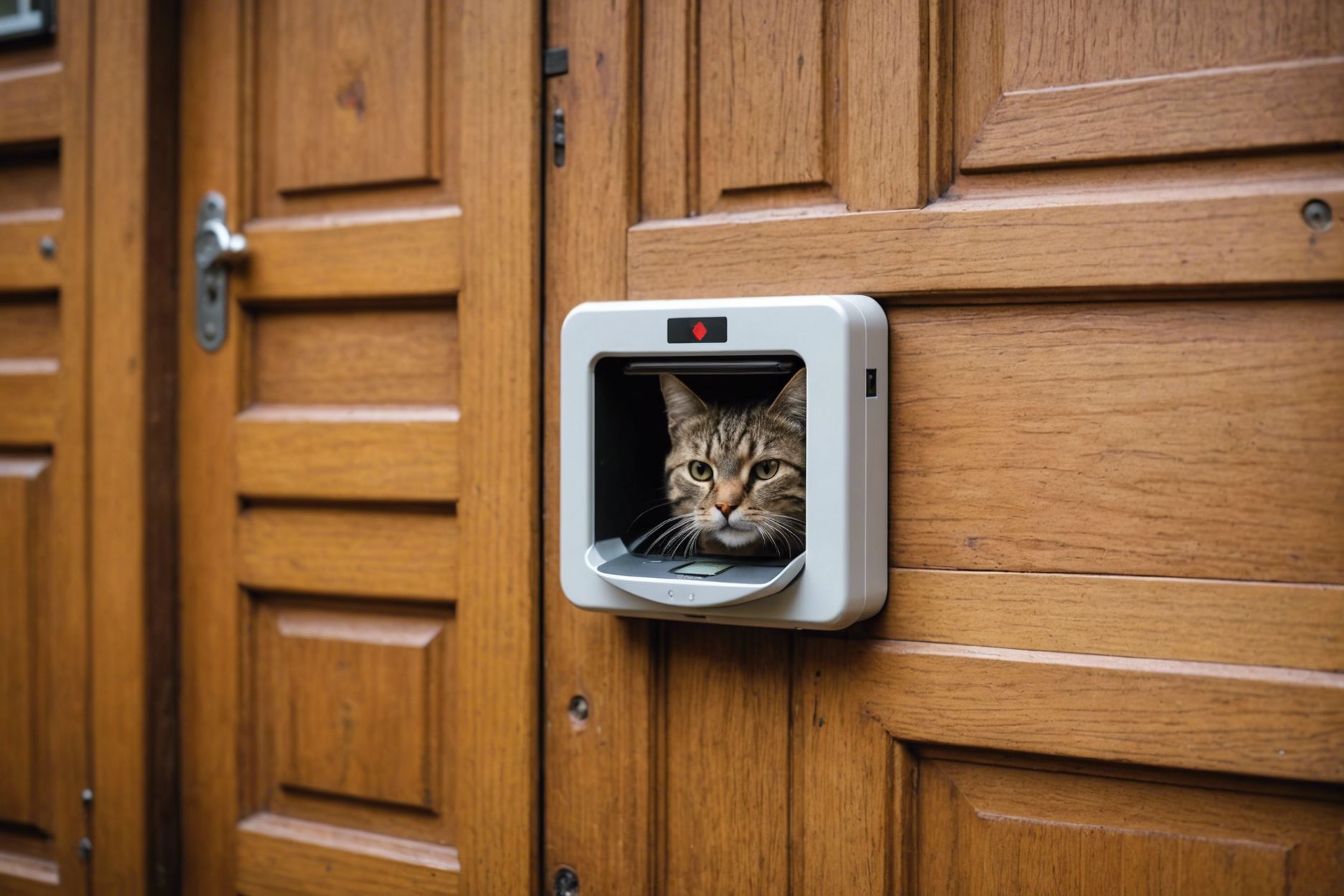
A microchip cat flap uses a sensor that recognizes the cat's microchip, thus granting access only to your pet.
In this article, you'll learn how this technology works, what benefits it offers, and what you should consider during installation. And you'll find out about the different approach we take at Flappie: The Flappie deliberately does not have a chip reader. It recognizes cats via camera and AI. Why this is the case and what Cat ID has to do with it, you can read below.
Important upfront: The Flappie is not a microchip cat flap
Before we dive into the technology, a note about ourselves, so that no false expectations arise:
The Flappie does not read microchips. Instead, we rely on what we do best: AI and camera technology. The Flappie already uses its camera to detect if your cat is carrying prey in its mouth, reliably keeping mice and birds outside.
The selective access control, meaning only your own cat can enter the house, is solved by Flappie with Cat ID: facial recognition for cats. Cat ID is under active development and will be available as a free software update for every Flappie. The necessary hardware is already built into every device; your cat needs neither a chip nor a collar for it.
Chip recognition is a proven technology, and it works well for many households. We deliberately chose the camera-based approach because it requires no implant or vet visit, works with any cat, and can be continuously developed via software. More on this at the end of the article.
Technical basics of the microchip cat flap
A microchip cat flap allows only your cat to access your home. The secret behind it is Radio Frequency Identification technology, or RFID for short. This technology uses electromagnetic fields to transmit data that recognize your cat's implanted chip. This keeps the door closed for uninvited guests.
The functionality is remarkably simple yet effective. Your cat's chip contains a unique identification number. When your cat approaches the flap, the cat flap's sensor reads this chip and decides whether the door opens or not. This enables selective access control without the need for physical contact.
Power supply for the cat flap: An overview
The power supply for the cat flap and the transponder is crucial for their functionality. The transponder, i.e., the chip, does not require its own power source. Instead, the necessary energy is provided by the cat flap's reader. This is done through an electromagnetic field that is activated when the cat approaches, thereby reading the chip. The cat flap itself is either directly connected to the mains or powered by batteries to ensure constant operational readiness.
Access control through chip recognition: How it works

Access control through chip recognition is based on the identification of the cat's implanted chip. As soon as the chip enters the reception range of the cat flap's sensor, it reads the chip's unique identification number. Access is only granted if this number is stored in the flap's system. This ensures that only authorized cats are admitted and the home remains protected from unwanted guests.
Why selective access control is so important
Selective access control is a central need for cat owners for several reasons. Especially if your cat is an outdoor cat, you want to ensure that it can safely enter and exit at any time. An intelligent flap offers your cat freedom and you as the owner the certainty that only your pet has access. This is particularly important to keep unwanted guests, such as stray cats or wild animals, away.
The benefits in everyday life:
- You can sleep soundly without getting up to open the door for your cat.
- You protect your home from other animals entering.
- You ensure that your cat has access to its home whenever it wants.
- You avoid stress for your cat, as it doesn't have to defend its territory against strange animals.
For this goal, there are currently two technological paths: chip recognition via RFID and facial recognition via camera and AI, as implemented by Flappie with Cat ID.
Chip recognition vs. Cat ID: Two paths to the same goal
Both technologies aim for the same thing: only your cat gets into the house. But they differ in their approach.
Chip recognition (RFID) reads your cat's implanted microchip. The prerequisite is that every cat is chipped and registered at the flap. The technology has been proven for years and works reliably in many households.
Cat ID (camera and AI) recognizes your cat by its face, just as you recognize it. It requires no chip, no collar, and no vet visit. You simply register your cat visually via the app. Because the recognition is based on software, it gets better with every update. Cat ID is currently under development and will be available as a free software update for every Flappie. The hardware for this is already built into every device.
The biggest practical difference: The Flappie can also do something that no chip flap can. It uses a camera to detect if your cat is carrying prey in its mouth, keeping mice and birds outside. A chip flap will open even if your registered cat brings in a mouse.
The best installation location for your cat flap

Choosing the best installation location for your cat flap is crucial to facilitate access for your cat while protecting your home. An ideal location is one that is easily accessible for your cat and where the flap is not exposed to the elements. This could be a door to the garden, a side wall not directly exposed to the elements, or even a basement window if your cat is used to taking that route.
You should also consider installing the flap in a slightly elevated position, as cats prefer to survey their territory from a higher vantage point before entering or leaving. A small platform or steps in front of the flap can help. Also make sure that the installation location is not too close to your living area to minimize drafts and the entry of cold air.
Tunnel extension: How the flap fits into thick walls

If you want to install your cat flap in a thicker wall, a tunnel extension is necessary. These extensions are simply attached to the existing tunnel of the flap to achieve the required length. How much additional depth an extension provides depends on the manufacturer. This allows the flap to be perfectly adapted to the wall thickness. Tunnel extensions are also available for the Flappie.
The installation adapter: Your helper for assembly
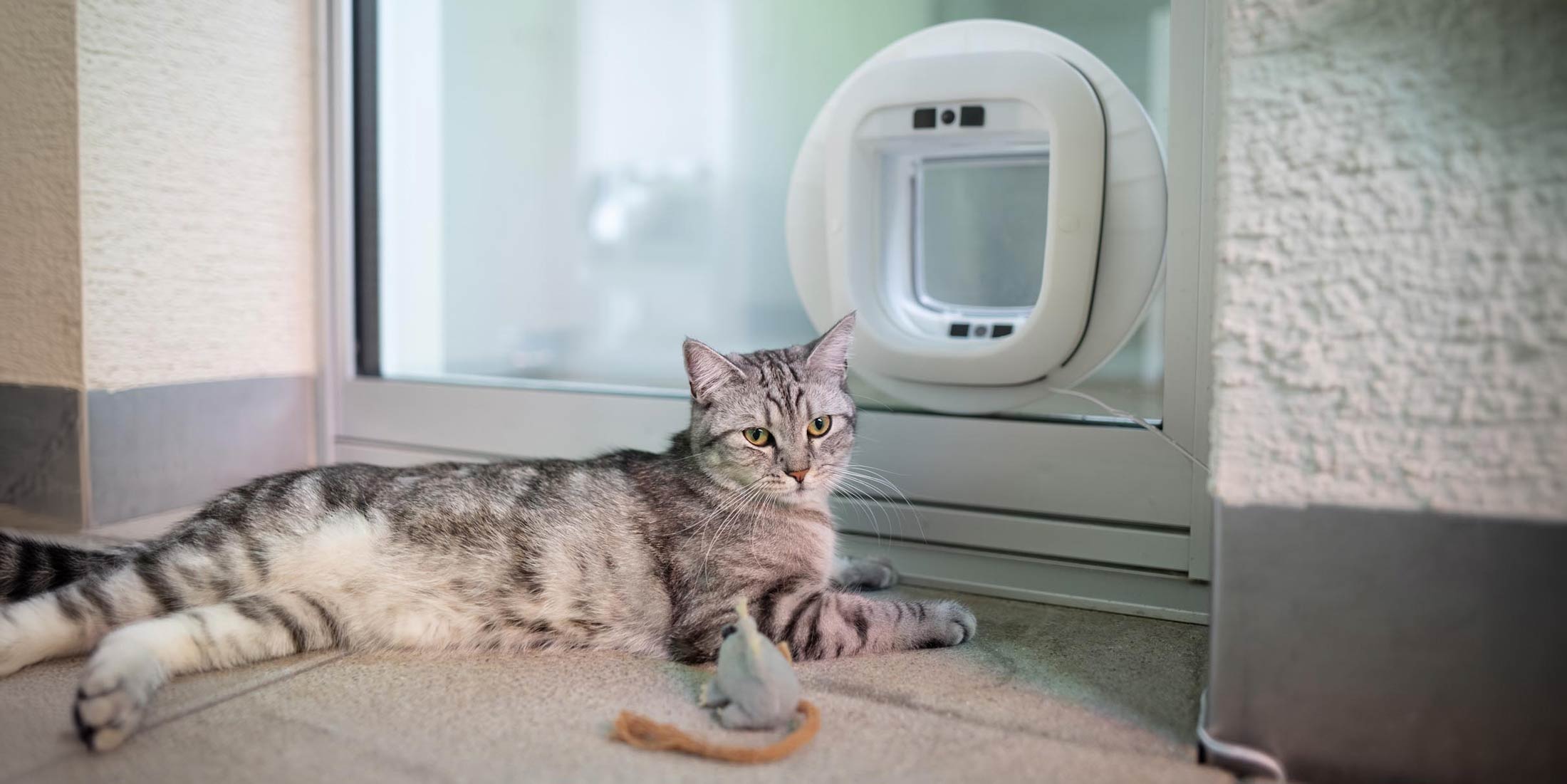
The installation adapter is a practical accessory for mounting your cat flap in various materials such as glass, thick walls, or metal doors. It not only simplifies installation but also ensures a secure hold for the flap. The use of the adapter is particularly important when mounting in glass, as there are special requirements for stability and sealing.
Discover Flappie: The intelligent solution for a prey-free home
Flappie revolutionizes the lives of cat owners with an intelligent cat flap that solves the problem of unwanted prey in the house once and for all. Thanks to prey detection via AI camera and remote control via the Flappie app, you can relax while your cat enjoys its freedom. The flap detects if your cat is coming home with prey and prevents its entry. This keeps your home clean and prey-free.
An overview of Flappie's advantages:
- Prey detection by AI-controlled camera reliably identifies prey animals and keeps them out. This already works today, with every Flappie.
- Cat ID provides selective access control via facial recognition: only your cat gets in, without a chip or collar. Cat ID is under active development and will be available as a free software update for every Flappie.
- Remote control via the Flappie App allows you to control the cat flap from anywhere, with notifications and insights into your cat's life.
Discover Flappie today and enjoy the benefits of a prey-free home.
Frequently Asked Questions
How does a microchip cat flap work?
A microchip cat flap uses RFID technology to recognize the cat's implanted microchip. When the cat approaches the flap, the sensor reads the chip and opens the door only if the chip's identification number is stored in the system. This allows for selective access control, so that only authorized cats are admitted.
Does the Flappie have a chip reader?
No. The Flappie deliberately does not read microchips. It works with an AI camera that already detects prey in your cat's mouth and keeps it outside. Selective access control will be handled by Cat ID, facial recognition for cats, in the future. Cat ID is under active development and will be available as a free software update for every Flappie. The necessary hardware is already built into every device.
What is Cat ID and when is it coming?
Cat ID is Flappie's facial recognition: It visually recognizes your cat, without a chip, collar, or vet visit, and only allows registered cats into the house. Cat ID is currently under active development. We will only announce a fixed date once the feature meets our quality standards. As soon as it is ready, every Flappie will receive the update automatically and free of charge, and we will proactively inform all customers via app and newsletter.

Share:
Everything about installing a cat flap in the window
Cat flap installation: A guide for cat owners.